Direct Lithium Extraction
DLE extracts lithium from brine in hours instead of years, with higher recovery rates and a fraction of the land and water footprint of evaporation ponds.
Why DLE? The Problem with Evaporation Ponds
Conventional solar evaporation works — but it was designed for a world where lithium demand was small and slow output was acceptable. Demand is now larger and more urgent. Battery manufacturers need more lithium, faster, from more locations — and evaporation ponds can only deliver from the driest places on Earth on timescales of up to 36 months.
DLE technologies solve this by selectively extracting lithium from brine using chemistry or physics — rather than waiting for the sun to do it. The brine can be re-injected into the aquifer, drastically reducing water consumption, and the process works anywhere in the world — including geothermal and oilfield brines outside the Andes.
The Four Main DLE Technologies
There is no single "DLE" — it is a category of technologies that share the goal of selective lithium extraction but use very different mechanisms. Each has trade-offs in cost, recovery rate, selectivity, and maturity.
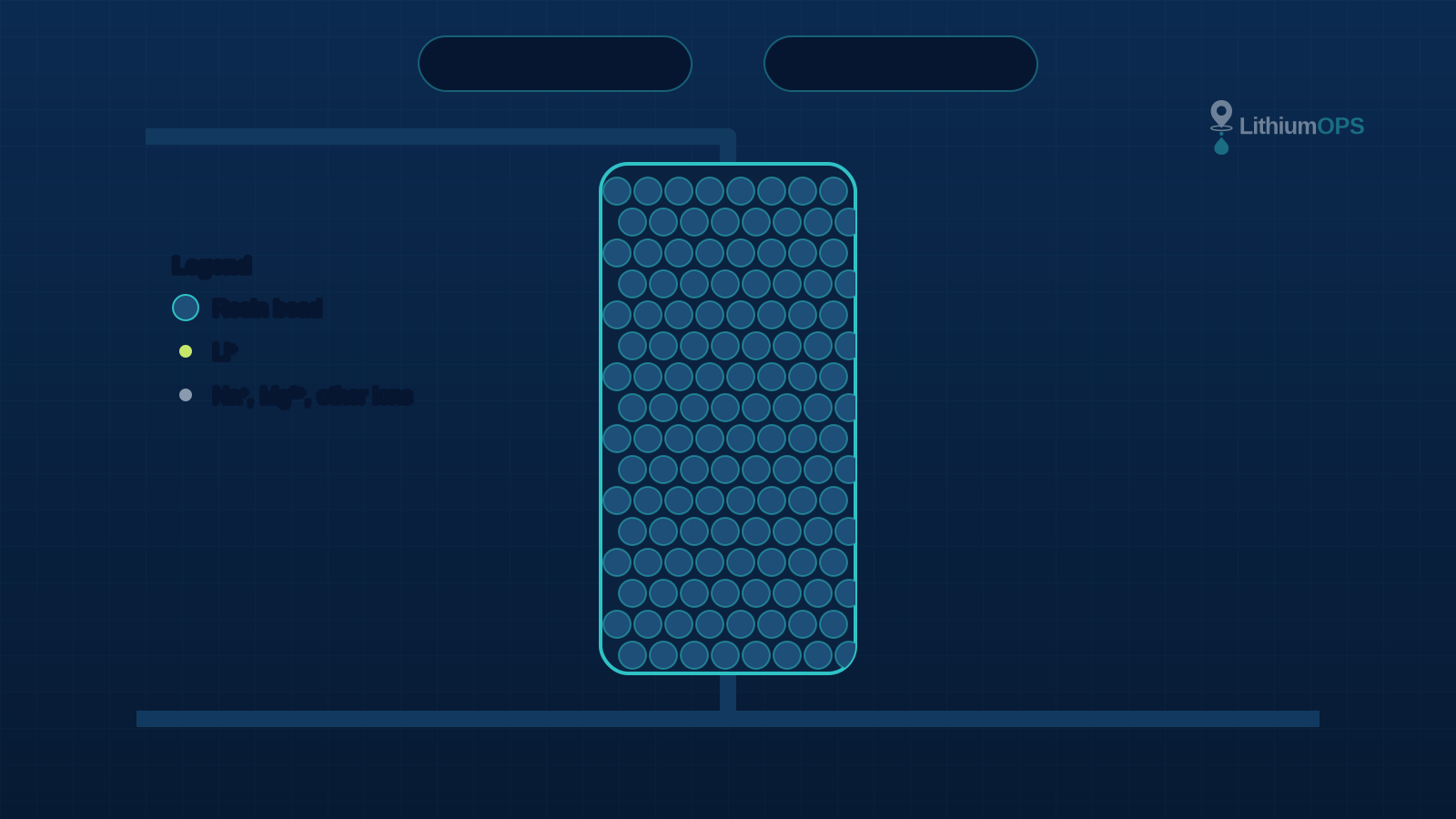
Brine passes through resin beads that selectively capture Li⁺ ions. A fresh-water wash then releases the lithium into a clean solution. High selectivity over Mg²⁺.
Lithium Ion Sieves (LIS) — typically TiO₂ or MnO₂-based materials — have nano-scale pores sized exactly for Li⁺. Other ions are too large or too small to fit.
An organic solvent selectively dissolves lithium from brine. The loaded solvent is then stripped with water to produce a concentrated Li solution. Established in copper/uranium industries.
Electric potential drives Li⁺ ions through a selective membrane or electrode surface. No chemicals required — only electricity. Still largely at pilot scale.
The DLE Process Flow
Whichever DLE technology is used, the process follows the same general steps from raw brine to a lithium-rich eluate:
Brine is pumped from the salar aquifer via production wells. Pre-treatment removes sand, clay and organics.
Brine passes through the selective extraction unit (IX resin, LIS sorbent, SX circuit, or electrochemical cell). Li⁺ is captured; depleted brine continues.
Depleted brine (stripped of Li but with other ions intact) is re-injected into the aquifer. Water balance is maintained — a key environmental advantage over evaporation ponds.
Captured lithium is released from the DLE media using a small volume of water or dilute acid, producing a concentrated lithium solution (~5,000–15,000 mg/L).
From here the eluate follows the same purification and conversion steps as a concentrated pond brine. They are described in Lithium Carbonate Production.
Commercial Status
DLE is not yet at the scale of evaporation ponds. Many projects are at pilot stage, and only a few operate commercially. The technology that wins will likely be the one that combines the highest recovery rate with the lowest reagent cost and the most durable materials.